



By Dr Roxy Davis, Founder, Ocean Freedom
Menopause reshapes the skin from the inside out. Understanding these changes is the first step to protecting skin properly during this stage of life and choosing the right sunscreen is central to that protection.
The Hormonal Shift Behind Changing Skin
Estrogen does far more for the skin than most people realise. It regulates collagen production, maintains skin thickness, supports hydration and keeps melanocytes, the cells responsible for pigment, functioning normally. When estrogen declines during perimenopause and menopause, all of these systems slow down at once.
The numbers are striking. Women can lose up to 30% of their dermal collagen within the first five years of menopause. Skin becomes thinner and less mobile. Blood flow to the epidermis decreases, leading to greater water loss and skin that feels persistently drier than before. Melanocyte activity also declines, leaving skin with less natural pigment protection against ultraviolet radiation.
The result is skin that is structurally more vulnerable to sun damage at precisely the stage of life when many women assume their sun care needs are easing.
Why Skin Becomes More Sun Sensitive
One of the most common experiences reported during menopause is burning more easily than in previous years. This is not imagined. Keratinocytes, the cells responsible for renewing the skin's surface and repairing it after sun exposure, become less efficient during this hormonal transition. Combined with reduced blood flow and a weakened skin barrier, this means skin takes longer to recover from sun exposure and reacts more strongly to it.
Progesterone decline compounds the effect further, increasing dryness and inflammation and raising overall susceptibility to sunburn. Many women also notice that skin reactivity intensifies during hot flashes, when skin is already working harder to regulate temperature and repair itself.
The Visible Consequences of Unprotected Sun Exposure
When declining estrogen combines with ongoing UV exposure, the visible signs of ageing accelerate. Fine lines and wrinkles deepen faster. Age spots and areas of hyperpigmentation appear more frequently, since disrupted melanocyte regulation makes it harder for skin to distribute pigment evenly. Dilated blood vessels and a more sallow or uneven complexion can also develop, particularly in skin that has not been consistently protected from the sun over the years.
None of this is inevitable. Consistent, correctly applied sun protection remains the single most effective way to slow these changes, regardless of the stage of life a woman is in.
Choosing the Right Type of Protection
Given how reactive and barrier compromised menopausal skin becomes, the type of sunscreen matters as much as the habit of wearing it. Mineral sunscreens containing Zinc Oxide and Titanium Dioxide sit on the surface of the skin and reflect UV rays rather than being absorbed into the body. This makes them significantly less likely to cause the irritation or allergic reactions that chemical sunscreens can trigger, an important consideration for skin that is already more sensitive than it once was.
Zinc Oxide carries an additional benefit for skin in this life stage. It has antibacterial properties and acts as a building block for skin repair, supporting a barrier that is already working harder to maintain itself. Mineral formulations are also non comedogenic, meaning they will not clog pores, and they are considerably less damaging to marine ecosystems than chemical alternatives, several of which have been detected in blood and breast milk and linked to endocrine disruption with long term use.
This is the foundation on which Ocean Freedom's entire mineral sunscreen range was built.
How Ocean Freedom Supports Skin Through This Transition
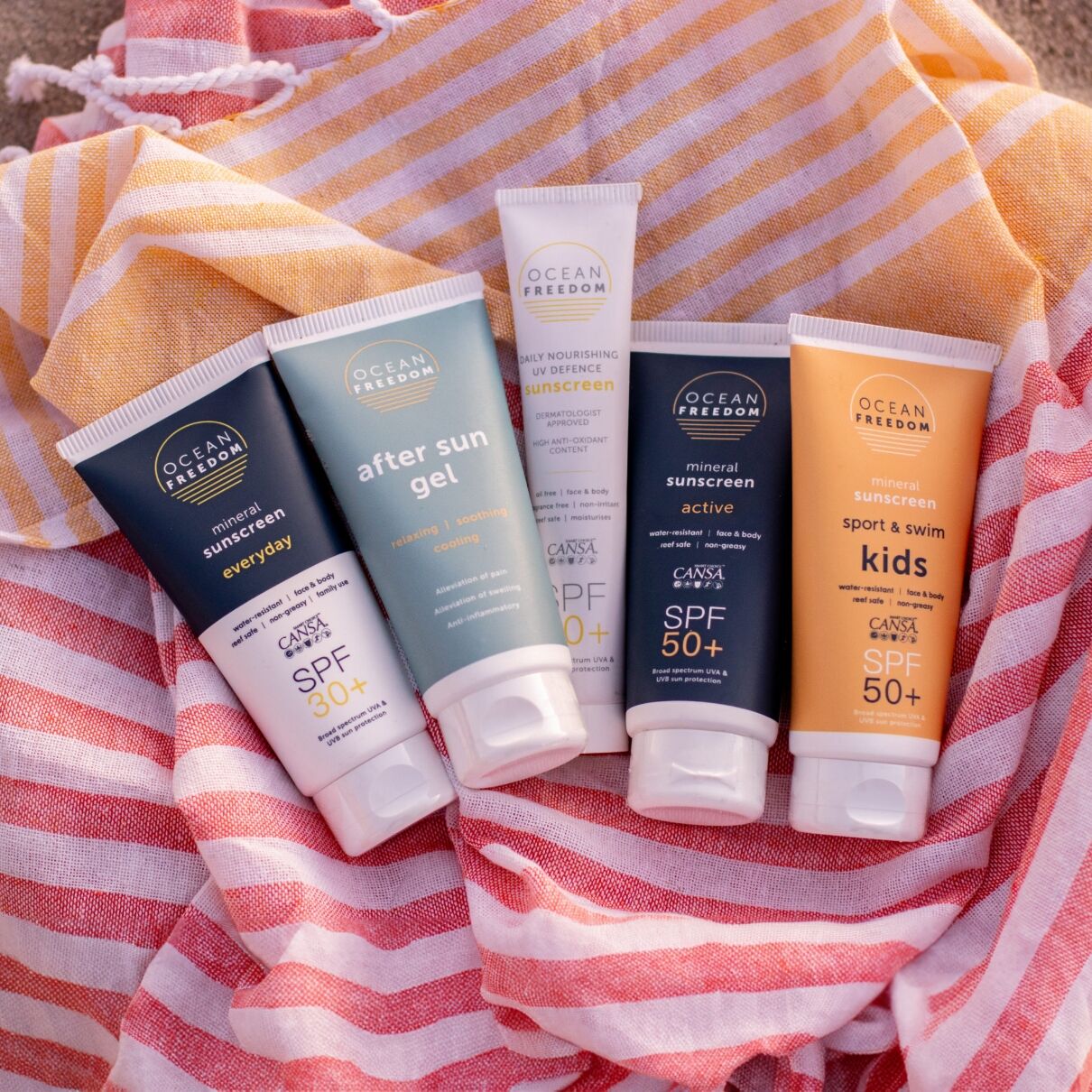
Ocean Freedom's SPF 30+ range was formulated with exactly this kind of skin in mind. For daily use across the face and body, the Everyday SPF 30+ range offers the same broad spectrum protection in a lighter, water resistant, non greasy formula suited to family life. Both ranges are paraben free, sulphate free, fragrance free and dermatologist approved, developed and tested under the demanding conditions of the South African sun.
Every Ocean Freedom sunscreen carries the CANSA Seal of Recognition as a Smart Choice Sunscreen for cancer risk reduction, and a portion of every sale supports cancer research.
Correct application remains as important as product choice. Apply sunscreen 15 minutes before going into the sun or water, cover all exposed skin generously and reapply every two hours, or every 40 minutes if swimming or sweating. No sunscreen is fully waterproof and skin experiencing hormonal change benefits even more from consistent reapplication than skin did in earlier decades.
Menopause changes the skin. It does not lower the bar for protecting it. If anything, this stage of life calls for more deliberate, informed sun care, built on formulations that respect skin that is working harder than it used to.
Protect the skin you have today. It has earned it.
https://oceanfreedom.com/collections/all